June 2026 · 9 min
Leh-Ladakh: Where the Road Forgets Where It's Going
On altitude, empty distance, and the particular silence of a cold desert.
The first thing Ladakh takes from you is your sense of scale. A ridge that looks like an hour's walk is four hours away. A village that appears to sit at the foot of the mountain is a thousand metres above the river. Nothing here is where your eyes place it.
You land in Leh at 3,500 metres and are told to do nothing for two days, which sounds like an inconvenience and turns out to be the best instruction anyone will give you in India. You sit on a guesthouse roof. You drink too much sweet tea. You watch the light move down the Stok range as if it were being lowered by hand.
The road as the whole point
Everywhere else you travel to see something. In Ladakh the travelling is the thing. The road to Nubra crosses a pass higher than any peak in the Alps and then simply keeps going, past sand dunes at 3,000 metres, past a monastery on a rock, past nothing at all for forty minutes at a time.
There is no scenery in Ladakh, only geology that hasn't finished arguing.
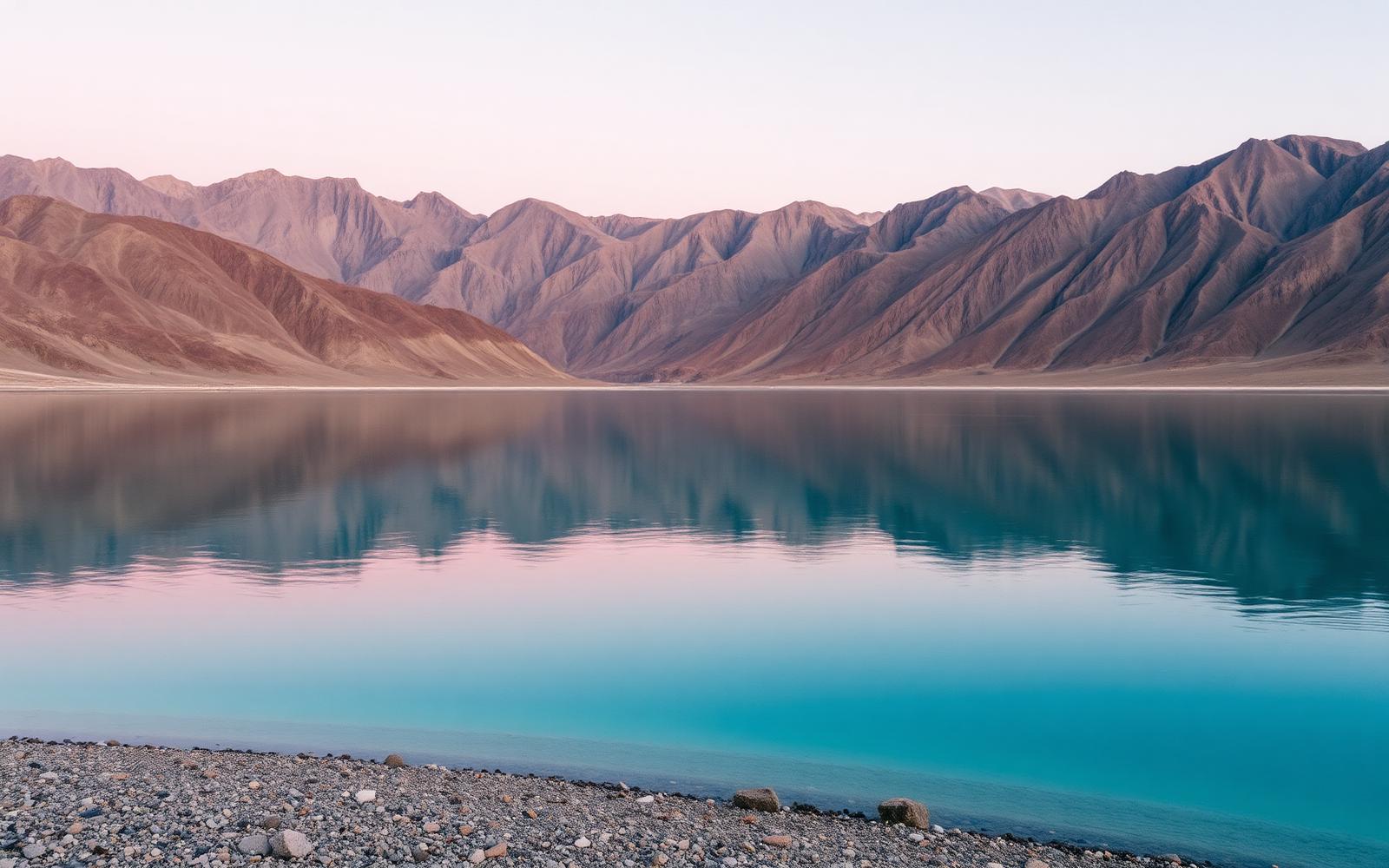
At Pangong the water is a colour that photography flattens and language fails: turquoise at the shore, ink at the middle, and every twenty minutes something else entirely. Most people stay two hours. The ones who stay the night see the lake go silver, then black, then full of stars.
Monasteries, early
Go to Thiksey before dawn. Not for the view — for the sound. Two long horns, a room of monks who have done this every morning of their lives, and a boy on butter-lamp duty who is clearly thinking about something else. Nobody performs it for you. That is precisely why it lands.
Ladakh is not a place you cover. It is a place you slow down inside until the emptiness stops reading as absence and starts reading as room.
Curious what a trip through Ladakh could look like?